.svg)
.svg)
.svg)

WeWard releases its second State of Walking Report, summarizing key findings around U.S. walking trends from January-December 2025.
What did 2025 look like in steps? We investigated 👀
In our second State of Walking Report, WeWard analyzed the daily movement patterns of nearly 15 million walkers worldwide, including more than 3 million in the U.S., offering one of the most comprehensive looks yet at how, where, and why people move.
🔎 Here’s what we found:
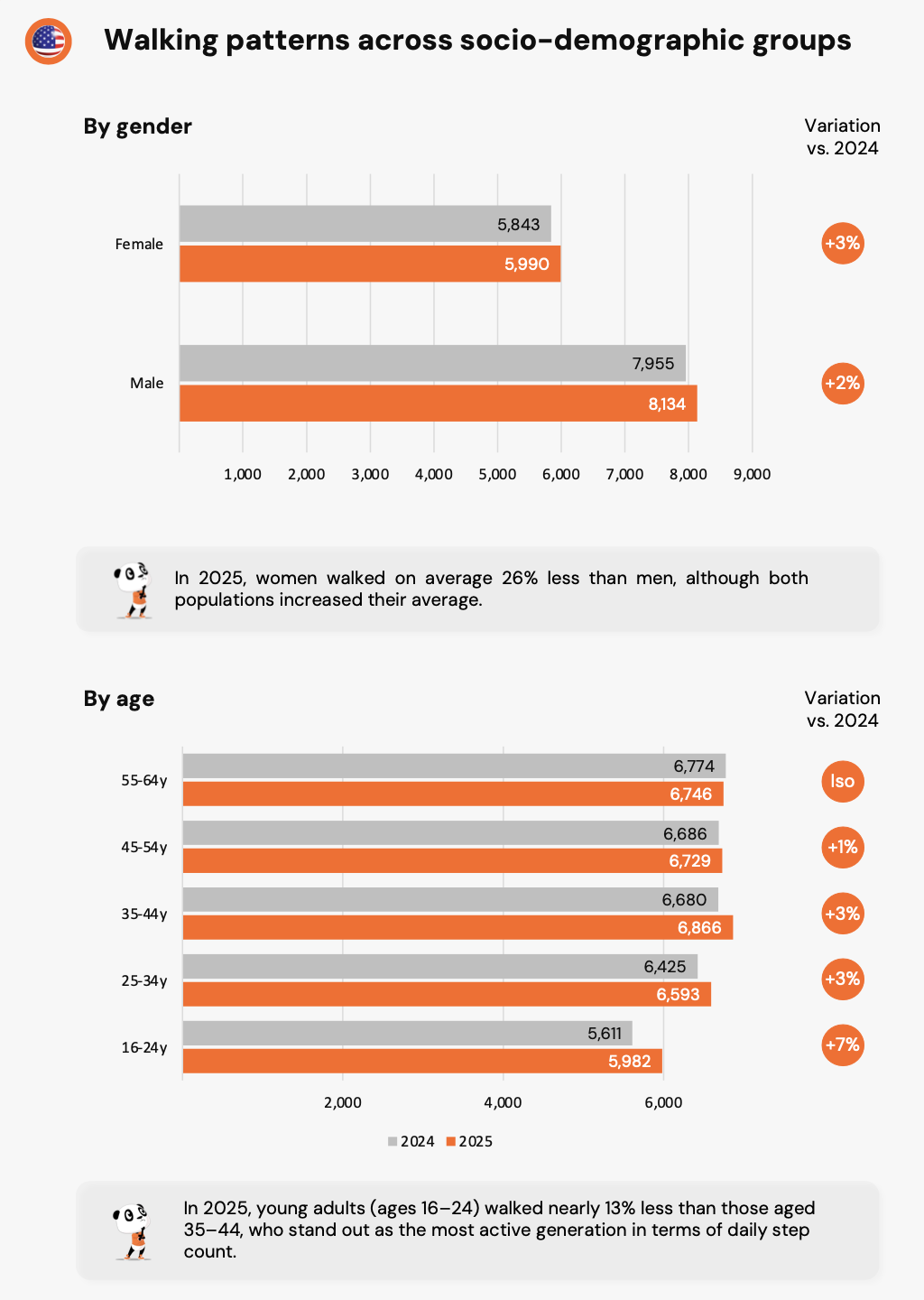
- American women walk about 26% less than men, highlighting a persistent gender gap in daily movement.
- Young adults walk nearly 13% less than mid-age adults, making Gen Z the least active generation in step count.
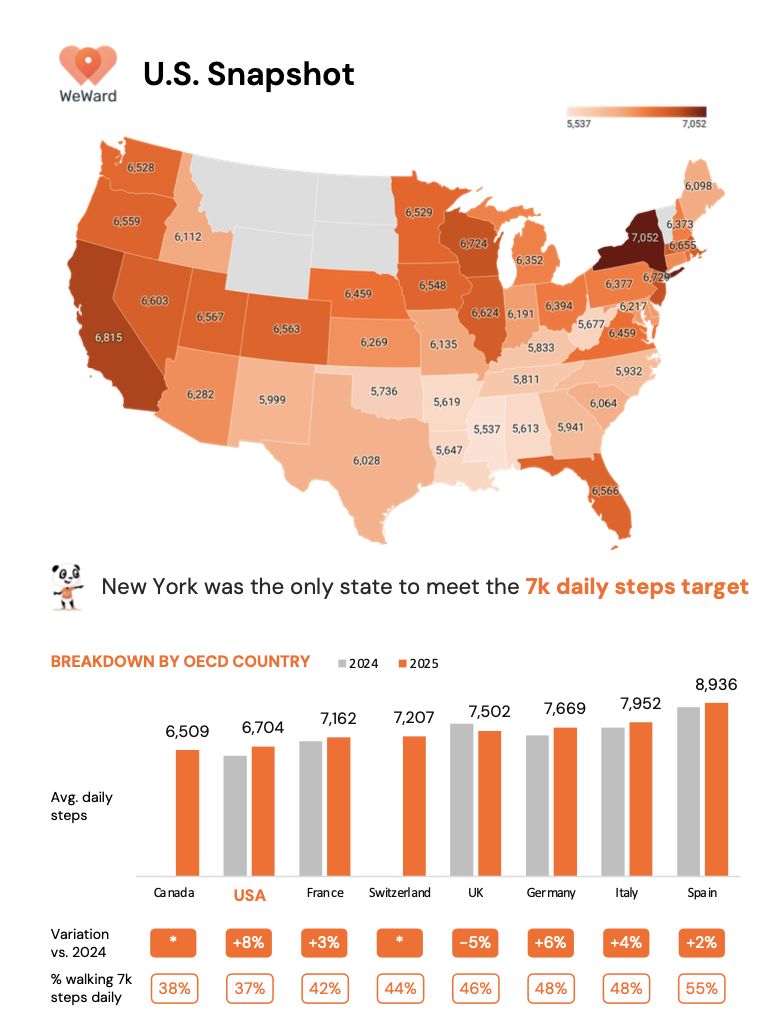
- New York was the only U.S. state to surpass the ~7,000-step daily benchmark, with an average of just over 7,000 steps.
- The U.S. ranked near the bottom among OECD countries in daily steps, ahead of only Canada.
Taken together, the data points to a clear reality: most Americans are still not moving enough, with roughly 63% walking fewer than 7,000 steps per day, a threshold linked to meaningful health benefits.
🚶 What shapes how much we walk?
Beyond step counts, the report also explored the strongest predictors of daily movement across health, economic, and environmental factors:
📊 More walking is associated with longer life expectancy and higher average income.
📊 Less walking aligns with higher diabetes and obesity rates.
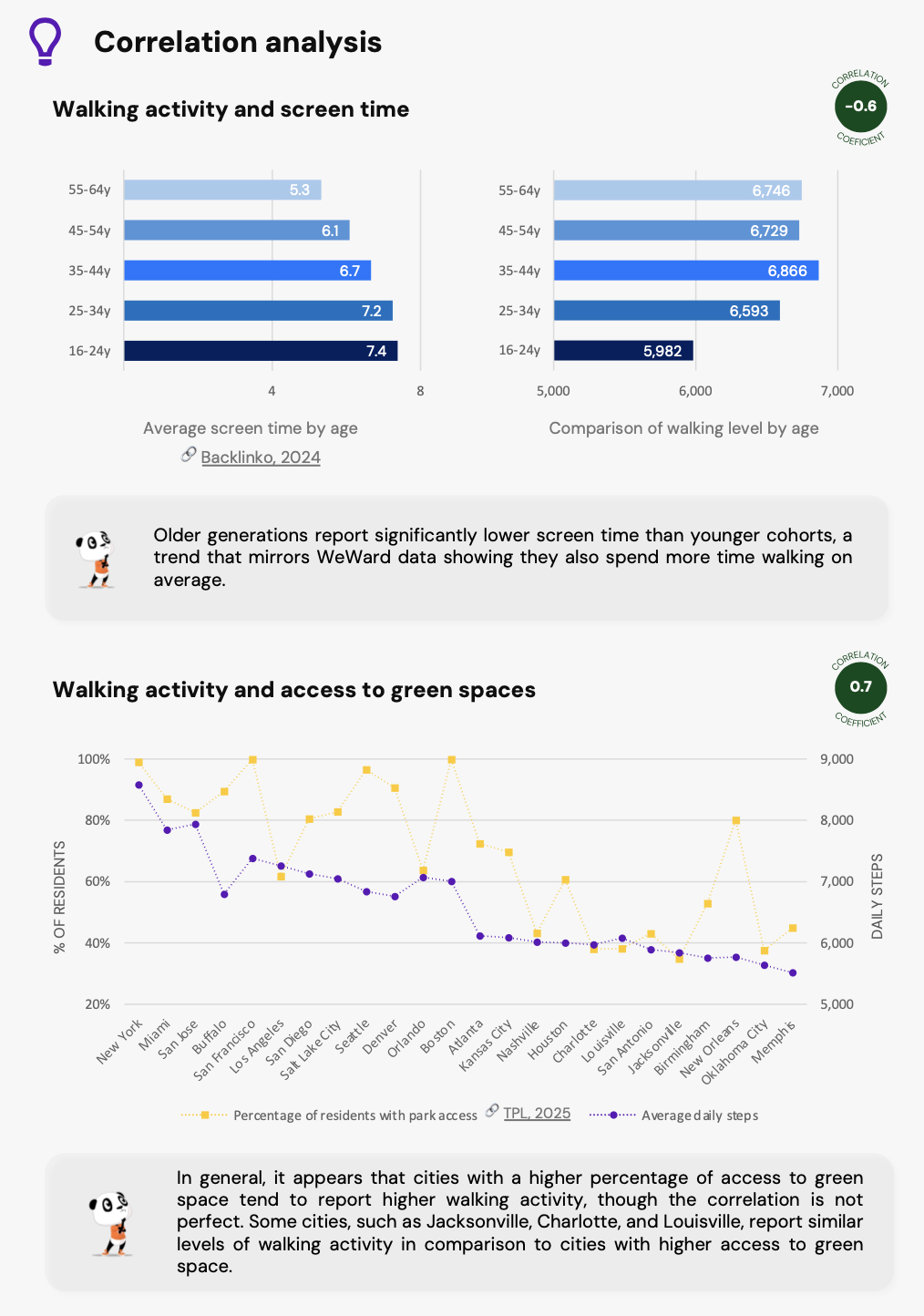
📊 Urbanization, transportation, and green space matter.

🖼️ The bigger picture
Our findings clearly indicate that walking is more than a personal habit. It’s a public-health behavior shaped by infrastructure, policy, environment, and everyday living conditions. Environments designed for movement consistently produce healthier, more active populations, underscoring a powerful opportunity: if we want healthier societies, we must build environments that make walking the easy, obvious choice.
Where does your city fall in the rankings?
👇 You can check out the full report here: Download the State of Walking Report



.png)
.jpg)
